

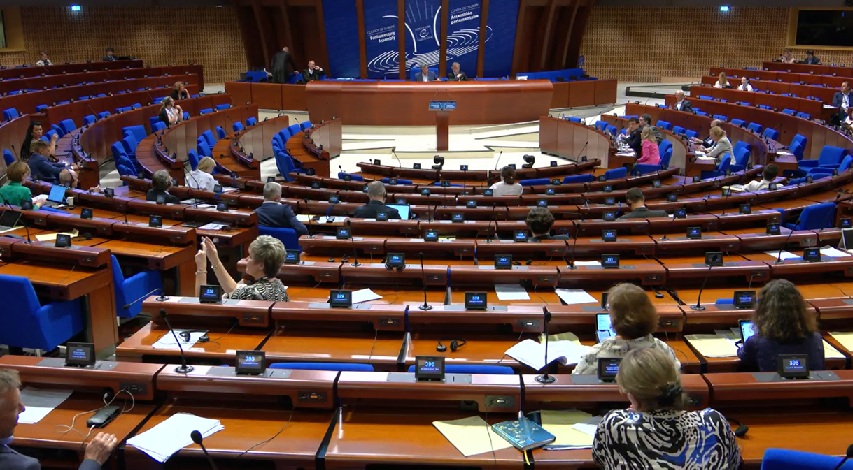
Belgrade/Strasbourg, 23 June 2026, dtt-net.com - The Parliamentary Assembly of the Council of Europe (PACE) today in a resolution raised concerns about situation of democracy, rule of law and public freedoms in Serbia. It said that since its last resolution on “The honouring of obligations and commitments by Serbia”, adopted in 2012, the situation has changed and that “there are now serious concerns about the country's adherence to the principles of democracy, rule of law, and the observance of public freedoms”.
The country is governed since 2012 by the Progressive Party (SNS) of the authoritarian President Aleksandar Vucic and its allies.
In a resolution adopted on the basis of a report by Victoria Tiblom of Sweden and Yunus Emre of Türkiye PACE expressed concern about a political environment marked by “significant polarisation” and ongoing tensions between the government and the ruling majority, on the one hand, and political opposition, the student movement and civil society on the other.
The parliamentarians deplored incidents of abuse of force by law enforcement authorities, arbitrary arrests and ill-treatment in custody during mass protests – following the November 2024 collapse of the Novi Sad railway station canopy, which resulted in the deaths of 16 people – which continued until the end of 2025 and led to a student movement seeking transparency, justice and early elections.
They also deplored the alleged use of a sonic weapon to disperse crowds during the mass demonstration in Belgrade on 15 March 2025 against Vucic and government he controls.
In this context, PACE called on the authorities to “avoid the use of unnecessary force against protesters” and to conduct independent investigations into these cases. It also urged the authorities to stop reprisals and intimidation measures against civil society activists, human rights defenders, journalists and independent media outlets, and to ensure a conducive environment for their work.
The Parliamentary Assembly also called on Serbian authorities to amend the “Mrdić laws” in the judiciary “as soon as possible”, in line with the recommendations of the Venice Commission, to pursue further reform of the judiciary and prosecution services in line with Council of Europe standards and to “show a genuine commitment to investigating and adjudicating cases of war crimes”.
The laws adopted in January by the parliament and sponsored by Vucic’s SNS was about control of prosecutor’s office and are heavily criticized by opposition parties and the European Commission.
Following criticism, SNS agreed to review them and process of changes is underway within the parliament.
