Brussels, 13 September 2026, dtt-net.com – A new report by International Monetary Fund (IMF) experts says that membership in the European Union could increase GDP per capita to new members to between 30 to 35% in the first ten years of membership, provided certain conditions are met and implemented properly. “Realizing this potential will require three mutually reinforcing forces: domestic structural reforms anchored in the EU Acquis, deeper integration into the single market, and effective use of EU funding, contributing broadly similarly to the overall gain,” reads the paper.
“Drawing on past enlargement experience, synthetic control estimates, and structural model simulations, it shows that replicating past gains—raising GDP per capita by 30%–35% within a decade—is achievable. But these gains are not automatic. Securing them will require productivity gains in line with earlier enlargement rounds, supported by three mutually reinforcing forces—domestic structural reforms anchored in the EU Acquis, single market integration, and EU funding. Each of these contributes one-third of the overall gain broadly,” reads the report.
Contributors the paper say that the pathway for prosperity is “productivity growth, which accounts for two thirds of income gains, driven by stronger institutions, better governance, and a more dynamic private sector.”
At the same, they write that with membership of new members.
“Existing EU members stand to benefit as well, especially if Europe continues to deepen its single market and unlock the full benefits of goods and services trade, capital, labour, and energy market integration,” they wrote.
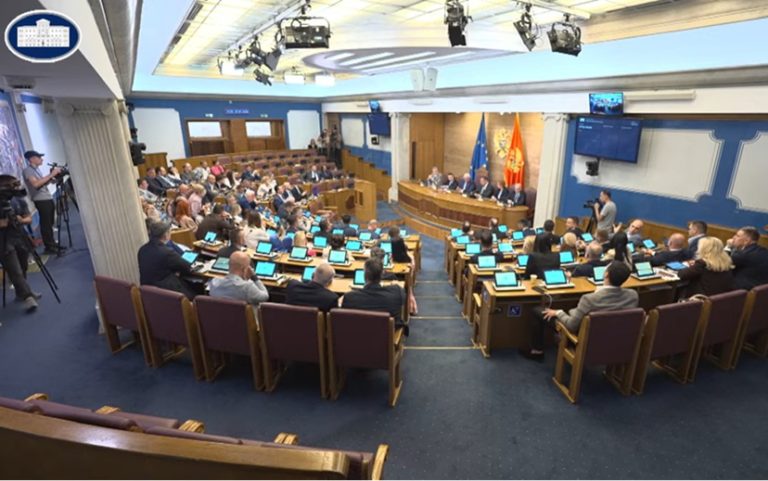
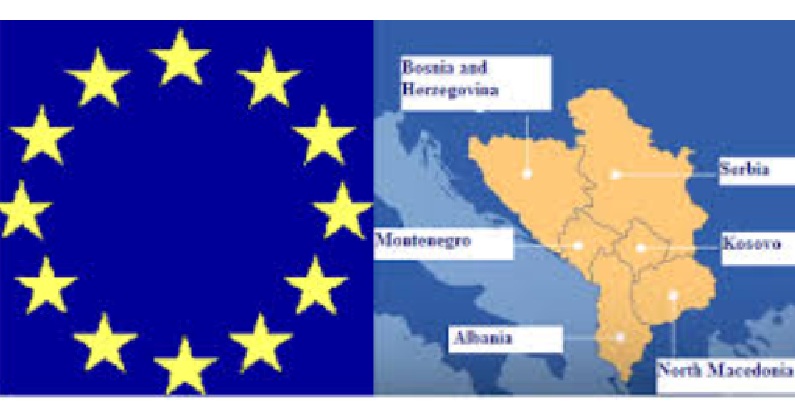
Montenegro is the frontrunner in EU accession process. The country has opened all 33 negotiating chapters and closed 18. As two chapters are automatically closed without talks, it has to close another 15. The government in Podgorica hopes to close all remaining chapters later this year, hoping that the country will become member of the EU in 2028.
Albania is the second most advances country in EU accession negotiations, after Montenegro. Albania has opened all negotiating chapters since the first ones in October 2024 and closed 3, and its government hopes for EU membership by 2030.
Serbia has launched EU accession negotiations in 2015, and has opened 18 negotiating chapters, of which 2 are already provisionally closed.
In December 2021 Serbia opened a Cluster 4 of four chapters – already opened and which need to be closed – in accession talks. Since then, it has not opened nor closed any chapters/clusters in the negotiation process for membership in the European bloc. Serbia’s negotiations are mainly stalled because of refusal to join EU sanctions against Russia and ongoing lack of progress at EU-mediated talks with Kosovo, on top of insufficient reforms.
Moldavia and Ukraine have opened seven chapters, of which five in June and 2 in July this year.
North Macedonia’s has not opened any negotiating chapters so far, as it is refusing to include Bulgarian community in the Constitution, a condition imposed by Bulgaria and embraced by other 26 EU members in 2022.
Bosnia and Herzegovina (BiH) was granted EU candidate status in December 2022 but has not opened any chapters because of insufficient progress with Brussels-set reforms as consequence of political disputes between Bosniak, Serb and Croat parties.
Kosovo is a potential candidate country for EU accession. It has applied for membership in December 2022, but the application is not being treated so far by member states, as five countries (Greece, Cyprus, Romania, Slovakia, and Spain) do not recognize its statehood.