

B
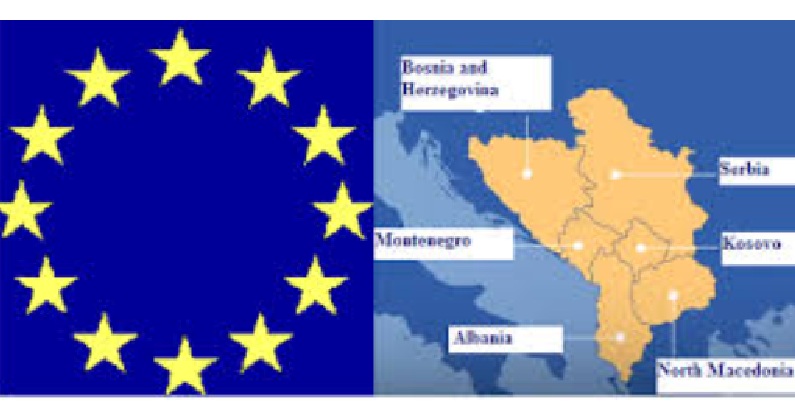
Brussels, 06 October 2026, dtt-net.com – The ‘Associate Member’ status which the EU is about to develop for Canada as part of European bloc deepening relations with the country across the Atlantic amid urgent needs of the bloc for energy resources, can not be offered to North Macedonia and Kosovo which are blocked on their promised membership because of vetoes of six member states, nor to Bosnia and Herzegovina (BiH), which is also at deadlock on EU pathway but because of internal inter-ethnic disputes, according to the European Commissioner in charge of enlargement Marta Kos.
Kos said the reason is that candidate countries should maintain the current status, but her answer is not valid for Kosovo, whose application for membership in the EU is not even being treated because of five member countries (Cyprus, Greece, Romania, Slovakia, and Spain) .
“No, I wouldn’t build this because there is a difference. On one hand, we have candidate countries who, because of different reasons, are on the different levels of where they stay in the accession process. One of them you have named [Kosovo] doesn’t have a candidate status yet, meaning that, and this is really me speaking as commissioner and as a person coming from this area of ex-Yugoslavia. It is important that we integrate all of them in the European Union,” Kos answered when asked by dtt-net.com.
“One of the biggest mistakes from the past is that we haven’t been able to do this already in the past. And we are paying the price for this today. So as long as they are candidates, I will do everything possible that they will be able to become full members of the European Union,” she added.
North Macedonia was granted the candidate status in 2005, but then because of Greek veto was not allowed to open accession talks. It was obliged to change constitutional name to North Macedonia by Greece which enabled the country to join NATO and created hopes of opening accession negotiations. But then Bulgaria used the veto and the previous government led by social-democrat SDSM party in Skopje, agreed in 2022 to Sofia condition to make constitutional changes to include Bulgarian community in it. But the Constitution is not being changed as the biggest party, the conservative VMRO-DPMNE of the Prime Minister Hristijan Mickoski, is refusing to give its votes, fearing that Bulgaria would later during accession talks use the veto on Macedonian language, culture and history as Bulgaria does not recognize them as Macedonian and treats Macedonian language as Bulgarian dialect.

